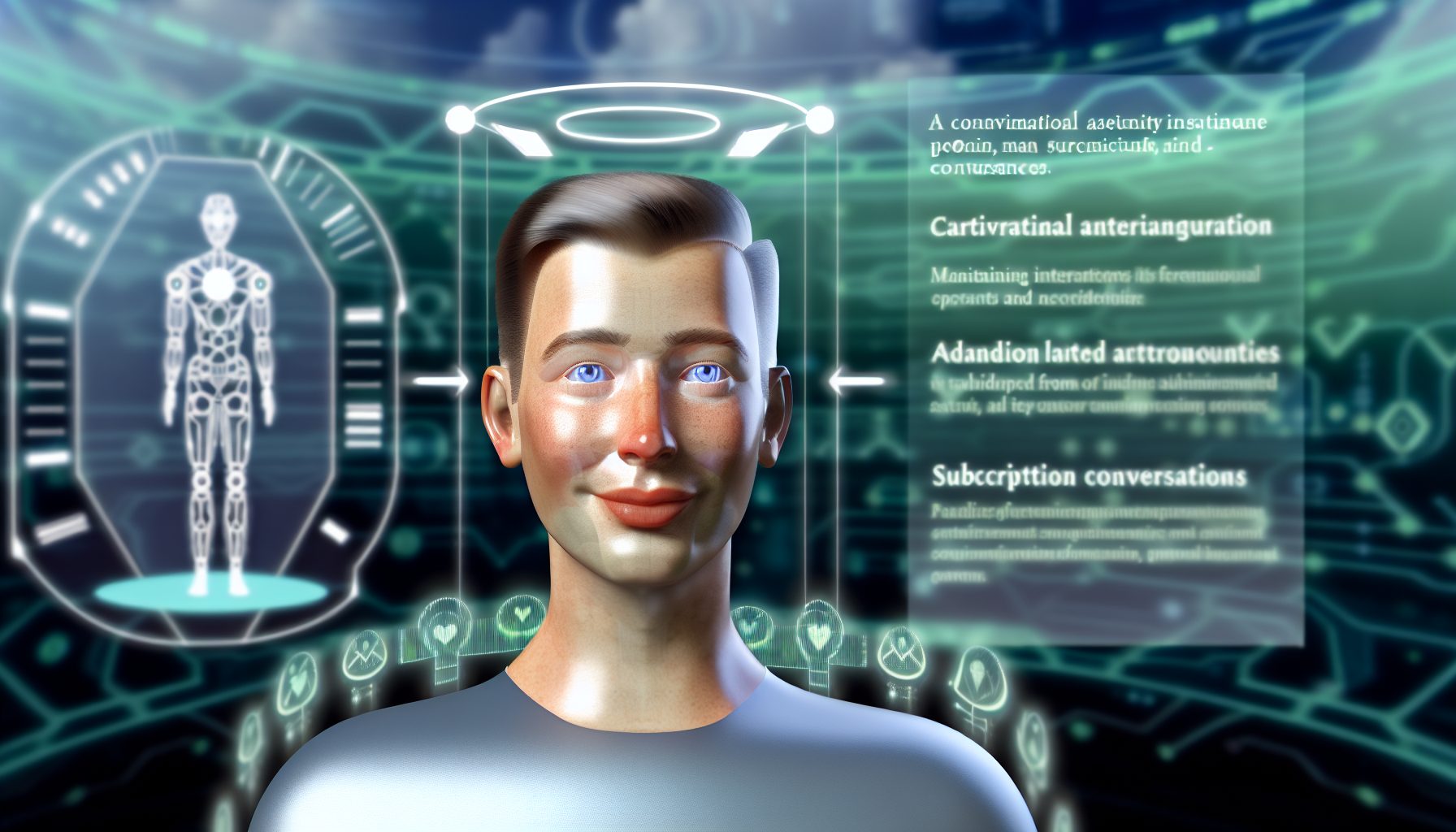
From Chatbot to Digital Avatar: How AI-Driven Visual Agents Are Redefining Customer Interactions in SaaS
In today’s digital-first world, businesses are rapidly evolving their interactions with customers. AI-driven technology is pushing traditional chatbots into obscurity, making way for more sophisticated digital avatars that offer a richer, more engaging customer experience. This evolution is not just a trend; it’s a significant shift in how services are delivered in Software as a Service (SaaS) markets. Understanding the transition from basic chatbots to dynamic visual agents is essential for companies aiming to enhance user engagement.
Estimated Reading Time: 8 minutes
- Digital avatars provide personalized and engaging customer interactions.
- Modern consumers expect instant responses and can become frustrated with traditional chatbots.
- Leveraging AI technologies can significantly improve customer satisfaction.
- Integration with CRM systems enables tailored user experiences based on real-time data.
- Case studies show measurable business improvements from adopting AI-driven avatars.
Table of Contents
- Context and Challenges
- Solution / Approach
- Concrete Example / Case Study
- FAQ
- Authority References
- Conclusion
Context and Challenges
The evolution from chatbot to digital avatar is primarily motivated by the need to improve customer interactions. Chatbots typically provide predefined answers to user inquiries in a text-only format. Conversely, digital avatars utilize visual elements, voice, and personality to create a more immersive experience for users. The challenges in the SaaS sector highlight the necessity of this evolution:
- Customer Expectations: Today’s consumers demand instant, personalized service. Traditional chatbots often fall short, resulting in dissatisfaction and frustration.
- Engagement: Text-only interactions can hinder user engagement. A dynamic avatar fosters a more captivating experience, retaining users’ attention.
- Data Utilization: SaaS companies possess extensive data, but harnessing this information to deliver real-time insights can be challenging without intuitive visual agents.
The importance of transitioning to digital avatars becomes evident as the SaaS landscape becomes more competitive. Businesses that harness these technologies to enhance customer interactions can not only improve retention but also draw in new clientele.
Solution / Approach
The transition from chatbot to digital avatar involves combining advanced AI technologies, user experience (UX) design, and data analytics. Pioneering companies such as Minimoes have led the charge in developing AI-driven solutions that bring digital avatars to life. These avatars can interpret user emotions using natural language processing, tailoring responses to foster more human-like interactions.
The implementation process generally involves building an intricate architecture where backend systems communicate effectively. Here’s an overview of this workflow:
- Data Integration: Collect data from various channels (web, mobile, CRM systems) to gain insights into user behavior and preferences.
- Machine Learning: Employ algorithms that enable the avatar to learn from each interaction, optimizing responses over time.
- User Interface: Design an appealing visual representation that aligns with the brand and resonates with the target audience.
- Feedback Loop: Develop a system for gathering user feedback and analytics, allowing for continuous refinement of avatar performance.
This meticulous orchestration of technology empowers digital avatars to elevate customer service and facilitate significant business gains.
Concrete Example / Case Study
Consider a fictional SaaS company, “CloudEase,” specializing in project management tools. Initially, CloudEase used a basic text-based chatbot to handle customer inquiries during business hours. While it met basic needs, user satisfaction remained low, often necessitating human intervention in conversations, which led to inefficiencies.
CloudEase recognized these limitations and integrated an AI-driven digital avatar. Partnering with Minimoes, they developed an avatar capable of understanding both written questions and voice commands. Within months post-implementation, several significant improvements emerged:
- Improved User Satisfaction: Customer satisfaction ratings soared by 30%, with users appreciating the interactivity and human-like responses of the avatar.
- Reduced Support Tickets: The avatar managed more complex queries, reducing the volume of support tickets by 25%, freeing human agents for higher-value tasks.
- Sales Growth: Enhanced customer interactions contributed to a higher conversion rate of free trial users to paid subscribers.
CloudEase’s experience illustrates the potential advantage of transitioning from traditional chatbots to digital avatars, elevating customer interaction to new heights.
FAQ
1. How does a digital avatar differ from a traditional chatbot?
A digital avatar integrates visual representation and personality with AI technology, creating a more personalized and engaging user interaction compared to text-only chatbots.
2. What technologies are involved in creating a digital avatar?
Developing a digital avatar involves various technologies, including natural language processing, machine learning, voice synthesis, and user interface design to ensure an engaging experience.
3. Can digital avatars be integrated with existing customer relationship management (CRM) systems?
Yes, digital avatars can be seamlessly integrated with CRM systems to access and utilize customer data, enabling personalized interactions based on user history and preferences.
Authority References
For more information on AI technology in customer service, consider consulting authoritative resources like:
Conclusion
The transition from basic chatbots to sophisticated digital avatars represents a substantial improvement in customer interactions within the SaaS sector. By embracing this technology, businesses can meet modern customer expectations while positioning themselves competitively in a market that increasingly values engagement and personalized service. As demonstrated in the case of CloudEase, the integration of AI-driven visual agents can yield positive outcomes, resulting in satisfied customers and a more efficient business model. Adopting this transformative change may just be the differentiator needed to thrive in a challenging landscape.

Tech blogger focused on AI, automation, and modern web tools.
Sharing practical insights, best practices, and strategies to build smarter digital systems.