Deploy AI Agents in SaaS Backends: An API-First Playbook for Custom Development, Web App Integrations, and Automation Trends
In the rapidly evolving landscape of technology, software development strategies are reimagined to leverage the capabilities of artificial intelligence (AI). Businesses can significantly enhance their Software as a Service (SaaS) products through intelligent automation and robust integrations. Deploying AI agents effectively in SaaS backends, however, calls for a structured API-first approach that maximizes compatibility and efficiency. This guide will delve into practical strategies for integrating AI agents into your SaaS backend, emphasizing the importance of an API-first mindset to unlock opportunities for custom development.
Estimated Reading Time: 8 minutes
- Understand the context and challenges of deploying AI in SaaS solutions.
- Utilize an API-first approach tailored for the seamless integration of AI agents.
- Implement architecture components to facilitate interaction between AI services and applications.
- Learn from a case study illustrating real-time AI integration in a CRM SaaS product.
- Address common FAQs regarding the deployment of AI agents.
Context and Challenges
The deployment of AI agents in SaaS products transcends merely integrating algorithms into existing systems. The SaaS ecosystem is traditionally fragmented, comprising various platforms, each with unique requirements and capabilities that influence functionality. An API-first approach lays the groundwork for development by prioritizing interoperability and flexibility, effectively bridging core applications and AI functionalities.
Embedding AI within SaaS introduces several challenges, including but not limited to:
- Limited resources for development and integration.
- Diverse coding standards and technology stacks.
- The complex nature of real-time data processing.
Key concepts like API management and data integration are essential to grasp for a successful implementation of AI agents. It is crucial for your application architecture to facilitate seamless data connections between various services, while also addressing significant pain points, such as latency in data transmission and data privacy concerns. Ensuring data security and compliance is paramount in operationalizing AI within your SaaS ecosystem.
Solution / Approach
Embracing an API-first strategy embodies a development philosophy that holds APIs as the backbone of your digital architecture. Your backend should be designed emphasizing the interactions of various services via APIs, allowing you to scale AI agent integrations effectively. By integrating AI agents, businesses can optimize workflows, reduce manual tasks, and ultimately enhance user experiences.
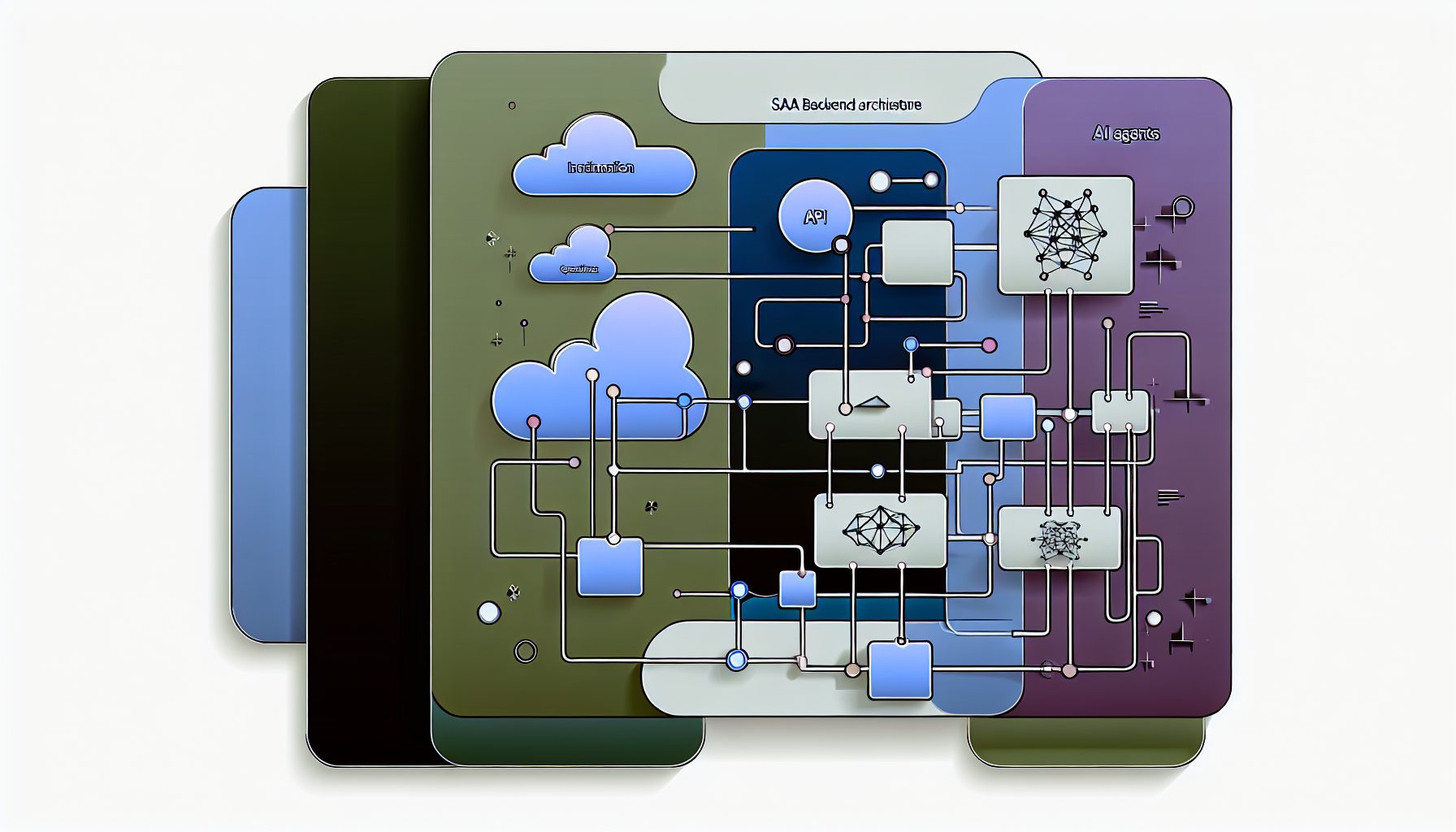
When developing your solution, the architecture layout can include:
- API Gateway: This acts as a singular entry point, routing requests between various services and AI functionalities efficiently.
- Microservices Architecture: Breaking your application into smaller, independent services allows for nuanced implementations of AI features without disrupting the entire system.
- Data Layer: Implement a robust data layer capable of interfacing with AI models using standardized data formats, ensuring consistency and reliability across services.
To better align developmental practices with emerging automation trends, collaborating with specialized agencies can be beneficial. For example, MySushiCode offers tailored development solutions while ensuring seamless integrations and automation across your application.
Concrete Example / Case Study
Consider a fictional case study involving a SaaS product focused on Customer Relationship Management (CRM). The motive was to integrate an AI-powered chatbot capable of addressing customer inquiries in real-time.
The initial step was defining the architecture. The team decided on an API-first approach and mapped out a microservices structure encompassing dedicated services for user queries and AI processing.
Following this, they established an API Gateway to manage incoming requests from the frontend and direct them to the correct microservice. The chatbot service was integrated with Natural Language Processing (NLP) APIs to enhance its ability to comprehend and respond to customer questions accurately.
This integration not only alleviated the workload on human agents but significantly improved response times, thereby enhancing customer satisfaction. The system also captured valuable insights from user interactions with the chatbot, informing future improvements.
This case study highlights several critical decisions: the importance of an adaptable architecture, the necessity of thoroughly testing API connections, and the transformational potential of AI in reshaping customer support dynamics.
FAQ
1. What are the benefits of an API-first approach in deploying AI agents?
An API-first approach promotes enhanced integration capabilities, scalability, and flexibility. This translates to smoother interactions between different system components, enabling more efficient data handling and a more seamless deployment of AI functionalities.
2. How can I ensure data privacy and security when integrating AI agents?
To maintain data privacy and security, adopt rigorous authentication measures, implement data encryption, and adhere to compliance standards such as GDPR. It is also critical to conduct regular audits of your API endpoints to address potential vulnerabilities promptly.
3. What types of AI agents can be deployed in SaaS applications?
AI agents can vary widely, including chatbots for enhancing customer service, recommendation engines for personalized user interactions, and analytical agents capable of extracting insights from user behavior. The selection of a suitable agent hinges on your specific business objectives and user requirements.
Authority References
Conclusion
Deploying AI agents in SaaS backends through an API-first approach unlocks numerous advantages, facilitating enhanced functionality, streamlining automation, and improving user experiences. By comprehending the challenges and strategically planning your implementation, you stand to gain a competitive edge in the marketplace. Ultimately, leveraging technology effectively can propel your business forward, making it an essential tool in your strategic arsenal.

Tech blogger focused on AI, automation, and modern web tools.
Sharing practical insights, best practices, and strategies to build smarter digital systems.