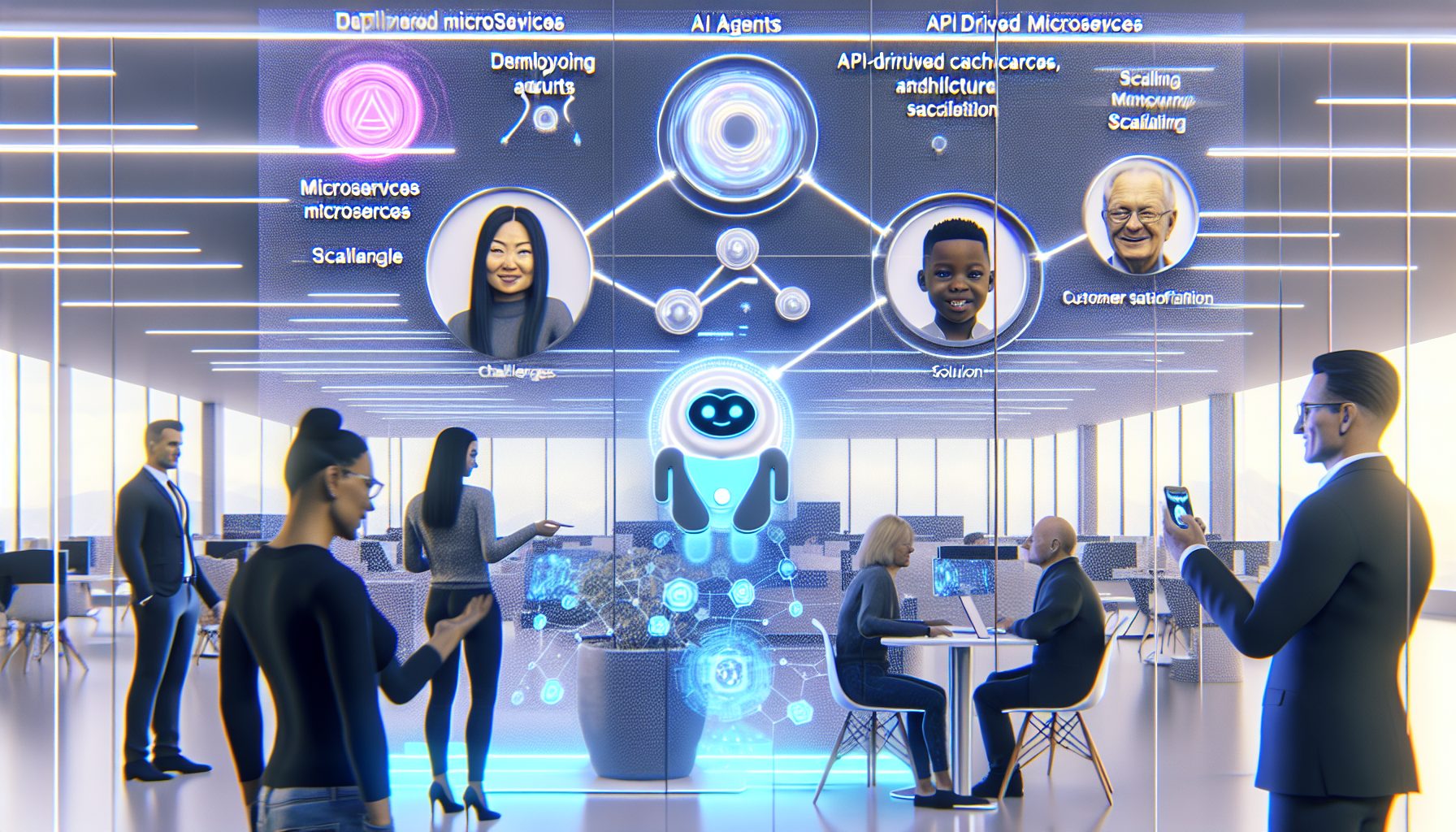
Deploying AI Agents via API-Driven Microservices: A Practical Blueprint for Scalable SaaS Apps
As businesses strive to enhance customer interaction, the deployment of AI agents has become crucial. Integrating these intelligent agents into software as a service (SaaS) applications can elevate user experiences, improve customer service, and streamline operations. However, the question remains: how can organizations effectively deploy AI agents in a scalable and efficient way?
This article provides a practical blueprint for deploying AI agents via API-driven microservices, highlighting the challenges, solutions, and real-world applications.
Estimated Reading Time: 8 minutes
- Understanding the role of AI agents in enhancing SaaS applications.
- The significance of API-driven microservices architecture.
- Common challenges in deploying AI agents and how to overcome them.
- Real-world case studies demonstrating successful implementations.
- Best practices and frameworks for effective AI deployment.
Context and Challenges
AI agents are software applications that use machine learning and natural language processing to automate tasks, provide information, or assist users. They are utilized across various environments, from customer service chatbots to virtual assistants.
While the promise of AI agents is immense, executing their deployment effectively presents several significant challenges. One primary concern is the integration of AI into existing systems. Companies often operate within complex, monolithic architectures that can hinder the adoption of new technologies. Additionally, maintaining scalability is crucial; as user demand grows, systems must manage an increased volume of requests without sacrificing performance.
The stakes for failing to implement scalable AI solutions are high: organizations risk dissatisfied customers, lost revenue, and escalating operational costs. Thus, it becomes essential to understand the foundational aspects of microservices and API integration for successfully deploying AI agents.
Solution / Approach
The solution lies in leveraging an API-driven microservices architecture. This approach entails decomposing applications into smaller, independent services that communicate through APIs. Each microservice can manage specific tasks, facilitating the development, deployment, and scalability of AI agents as needed.
For instance, a company might implement a customer service AI agent as a designated microservice. This agent can interact with customer inquiries, analyze data, and respond in real-time. By integrating APIs, organizations can seamlessly connect this AI agent with other microservices, such as payment processing or order management, creating a comprehensive customer service solution.
Moreover, employing tools that specialize in AI customer interactions can elevate the functionality of your AI agents. For example, Minimoes offers services that enhance AI capabilities, allowing companies to engage customers more effectively and automate numerous processes, thus driving user engagement and satisfaction.
Concrete Example / Case Study
To illustrate this concept, let’s examine a hypothetical e-commerce company, ShopSmart, aiming to enhance its customer service experience. Initially, their support is handled by human agents, resulting in long wait times and inconsistent service quality. In response, ShopSmart opts to deploy an AI customer service agent.
Utilizing a microservices framework, ShopSmart constructs a dedicated AI agent microservice that can handle frequently asked questions, track orders, and manage returns. This AI agent connects with the company’s existing CRM, order management system, and payment gateways through APIs.
Consequently, when a customer inquires about their order status, the AI agent can swiftly retrieve real-time data from the order management microservice, provide an immediate response, and even initiate a return process if requested—all without human intervention.
This deployment not only enhances customer satisfaction but also alleviates the workload for human agents, enabling them to focus on more complex queries that require a human touch. As a result, ShopSmart experiences improved operational efficiency and elevated customer retention through this strategic implementation.
How It Works
The architecture of API-driven microservices for AI agent deployment involves several key components:
- Microservices: Independent services representing various functionalities (e.g., order management, user management).
- API Gateway: A centralized point for managing API requests and routing them to the appropriate microservices.
- Data Management Layer: Databases and caching systems that store shared data for microservices.
- AI/ML Models: Trained models hosted in a dedicated service, accessible by other microservices for decision-making tasks.
To implement this architecture, follow these steps:
- Define Services: Identify and outline the specific services required for the application.
- Develop APIs: Create RESTful APIs for communication between microservices.
- Train AI Models: Use existing datasets to train your AI models and integrate them into the relevant microservices.
- Deploy Services: Utilize containerization (e.g., Docker) for easy deployment and scaling of microservices.
- Monitor Performance: Implement monitoring tools to ensure performance and scalability meet user demands.
FAQ
What is the primary benefit of using microservices for AI deployments?
The primary benefit is scalability. Microservices allow organizations to scale specific components of an application independently, accommodating increased user demand without overhauling the entire system.
How can I ensure my AI agents remain effective over time?
Regularly update and train your AI models based on user interactions and feedback. Adopting an iterative approach helps maintain effectiveness and improves overall accuracy in responses.
What are common challenges when integrating AI with legacy systems?
Common challenges include compatibility issues, data silos, and resistance to change. Planning for gradual integration, utilizing APIs, and fostering team buy-in can help mitigate these challenges.
Authority References
Conclusion
Deploying AI agents through an API-driven microservices architecture presents an effective solution to modernize customer interactions and enhance operational efficiency in SaaS applications. By adopting this methodology, businesses can not only elevate user experiences but also position themselves for sustainable growth.
Successful implementation necessitates careful planning, leveraging specialized tools like those offered by Minimoes, and continuously evolving AI capabilities based on user needs.

Tech blogger focused on AI, automation, and modern web tools.
Sharing practical insights, best practices, and strategies to build smarter digital systems.