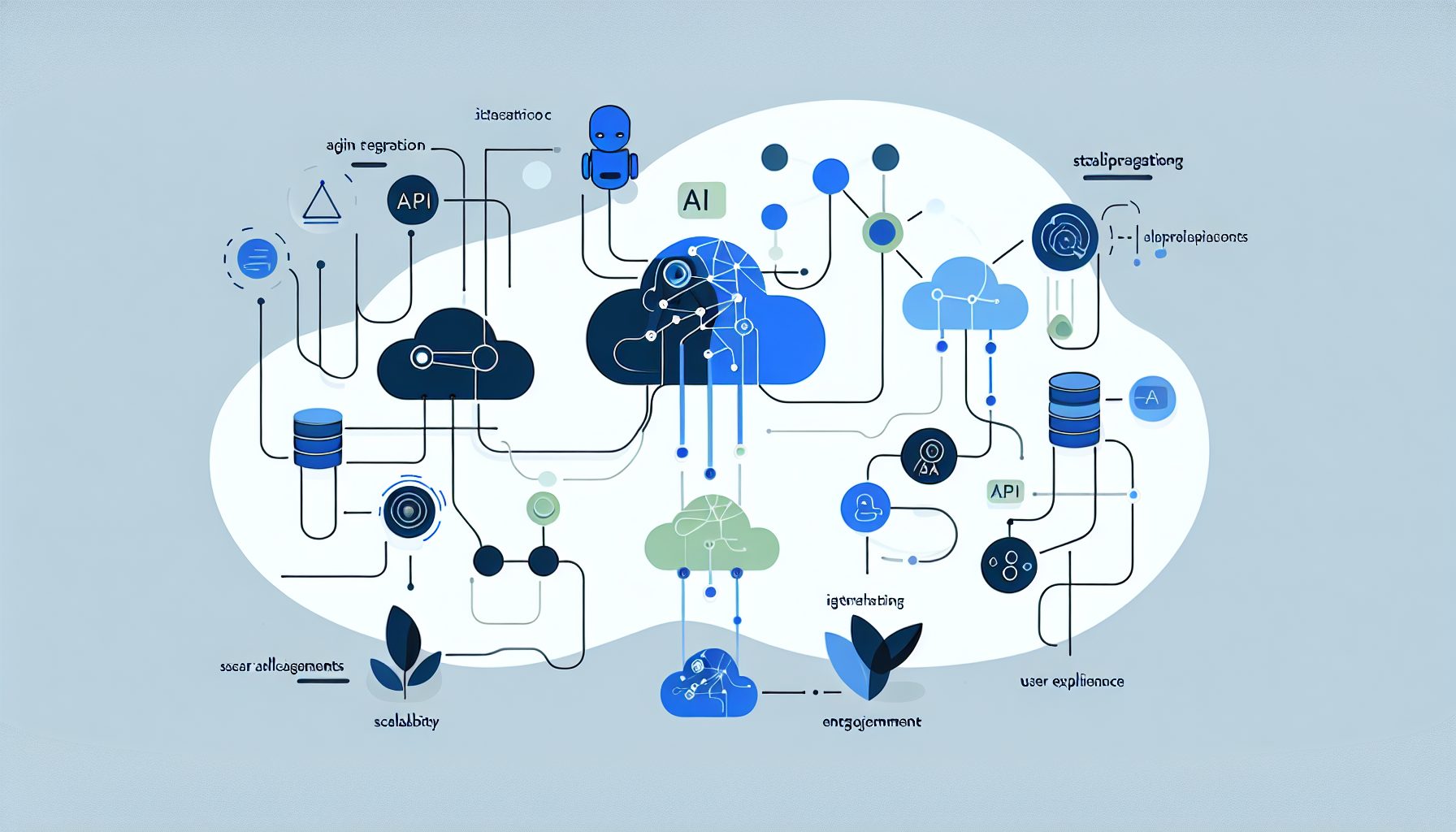
API-Driven AI Agents: Practical Patterns for Deploying Scalable SaaS Backends
In today’s fast-paced digital landscape, businesses are constantly seeking ways to enhance their offerings and improve efficiency. One transformative approach that has gained popularity is deploying API-driven AI agents. This article explores practical patterns for developing scalable SaaS backends that leverage AI capabilities, ensuring you understand not just the “how” but also the “why” behind this technology.
Estimated reading time: 8 minutes
- Understand the concept and importance of API-driven AI agents.
- Explore the challenges of integrating AI into existing systems.
- Discover effective implementation patterns using microservices architecture.
- Learn from a concrete case study with an e-commerce company.
- Find answers to common questions regarding API-driven architectures.
Table of Contents
- Context and Challenges
- Solution / Approach
- Concrete Example / Case Study
- FAQ
- Authority References
- Conclusion
Context and Challenges
API-driven AI agents refer to artificial intelligence systems that interact with other applications via APIs (Application Programming Interfaces). These agents automate complex tasks, provide insights, and enhance user experiences across various sectors, from customer service to data analytics.
However, integrating API-driven AI agents comes with challenges such as:
- Integration: Ensuring seamless interaction between different components of a digital ecosystem.
- Scalability: Maintaining performance as user demand increases.
- Data Management: Effectively handling vast amounts of data securely and efficiently.
Recognizing these challenges is crucial for developing robust and scalable backend architecture that supports your AI initiatives.
Solution / Approach
The foundational solution to the identified challenges is through a microservices architecture paired with effective API management. This paradigm enables teams to develop, deploy, and maintain individual services independently, which is vital for scalability. Each AI agent can be implemented as a microservice that interacts via APIs with front-end applications and other backend services.
A strategic implementation involves state management and orchestration. Utilizing tools such as Kubernetes for orchestration allows developers to ensure that various microservices, including AI components, can scale dynamically based on load. Moreover, adopting cloud-based solutions can enhance operational efficiency while minimizing infrastructure costs.
For those venturing into development and deployment, agencies like MySushiCode specialize in AI application development, offering tailored services to create easily manage and extend API-driven environments.
Concrete Example / Case Study
Consider a hypothetical e-commerce company, “ShopSmart,” which aims to improve its customer support system. By implementing an API-driven AI chatbot powered by natural language processing, ShopSmart can provide 24/7 customer assistance. Here’s how they executed this:
- Microservices Deployment: The chatbot was developed as a separate microservice, which queries a product database and integrates with their order management system via APIs.
- Scalable Infrastructure: ShopSmart utilized cloud solutions to ensure customer inquiries could be addressed promptly, even during peak shopping seasons, allowing seamless scaling without downtime.
- Data Handling: All customer interactions were logged securely, providing valuable data to machine learning algorithms for continuous improvement of the chatbot’s performance over time.
This implementation improved response times and customer satisfaction significantly while reducing the workload on human agents. Key lessons learned included the importance of maintaining thorough API documentation and the necessity for monitoring system performance closely.
FAQ
What are the primary benefits of using API-driven AI agents?
API-driven AI agents empower businesses to create flexible systems that permit independent updates, enhance user experiences through automation, and scale seamlessly according to demand.
How can data security be ensured in API-driven architectures?
To secure sensitive data in API-driven architectures, organizations should implement robust authentication mechanisms, utilize HTTPS, and continuously monitor API usage.
What are common pitfalls to avoid when deploying AI agents?
Common pitfalls include neglecting comprehensive testing, failing to update AI models with incoming data, and not providing users with adequate training for interacting with AI systems.
Authority References
For further reading on AI and microservices, consider the following authoritative sources:
Conclusion
API-driven AI agents present a tremendous opportunity for businesses to enhance their service offerings and operational efficiency. By addressing the challenges associated with this technology, you can implement a robust and scalable backend to support your AI initiatives. As you embark on this journey, consider leveraging the expertise of specialized agencies in AI application development to maximize your chances of success.

Tech blogger focused on AI, automation, and modern web tools.
Sharing practical insights, best practices, and strategies to build smarter digital systems.