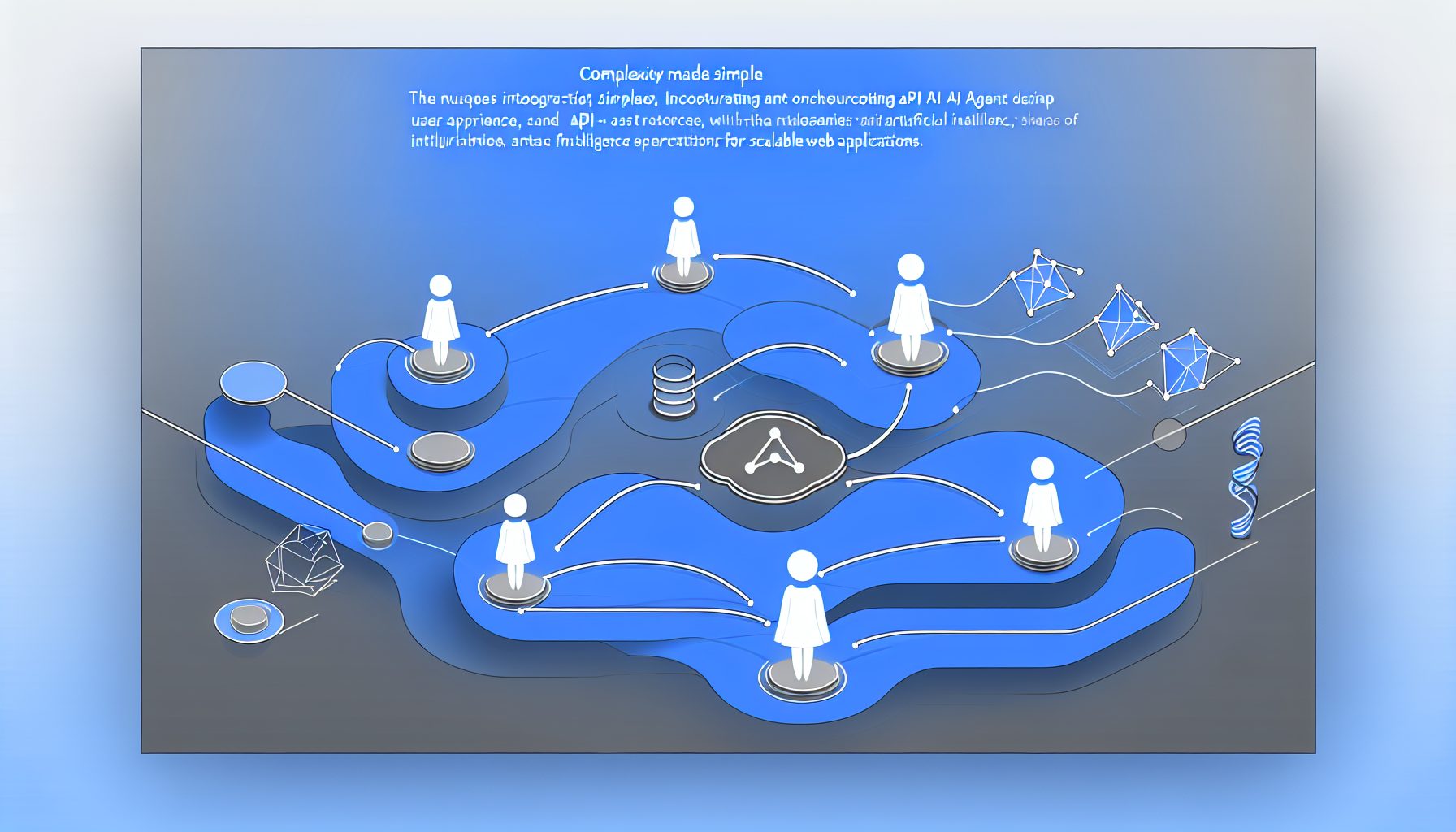
Orchestrating API-First AI Agents for SaaS: A Practical Blueprint for Scalable Web Apps
The digital landscape is evolving at a breakneck pace, urging businesses to innovate continuously. For SaaS (Software as a Service) providers, embracing AI capabilities is paramount. Orchestrating API-first AI agents presents a significant opportunity to enhance user experience and streamline operations. This article provides a detailed blueprint for implementing such a strategy effectively, ensuring your SaaS application remains competitive and insightful.
Estimated Reading Time: 8 minutes
- Understand the significance of API-first development in SaaS.
- Recognize common challenges in integrating AI capabilities.
- Explore a structured approach to architecture and implementation.
- Review a case study illustrating effective AI integration.
- Identify critical factors for refining AI models with user feedback.
Table of Contents
Context and Challenges
API-first development emphasizes designing software with the application programming interface (API) as the focal point. This methodology simplifies the integration of various services, including AI capabilities, which has become increasingly essential for SaaS applications due to demands for responsiveness and scalability.
However, many companies encounter specific challenges in this domain:
- Complexity of API Integrations: Different APIs have varying requirements and functionalities, complicating workflows.
- Cognitive Load on Users: Poorly designed AI features can overwhelm users, hindering usability and causing frustration.
- Resource Constraints: There is often a shortage of skilled developers well-versed in both APIs and AI technologies.
Navigating these challenges is critical for any SaaS application aiming for growth and user satisfaction.
Solution / Approach
The foundation of a successful API-first AI agent strategy for SaaS applications lies in well-defined architecture. This involves multiple layers of integration that ensure smooth interactions between AI models and application interfaces. Proper planning and execution can significantly enhance efficiency and user engagement.
- API Design: Craft a robust API that efficiently manages data requests and responses. The OpenAPI Specification serves as an excellent framework for structuring these APIs.
- AI Model Integration: Leverage cloud-based AI services or develop custom models. This adaptability allows for seamless connections with existing user data and application functionalities.
- Data Management: Establish data collection and processing pipelines that support real-time analytics and learning for the AI agent.
- Microservices Architecture: Decompose applications into microservices to enhance scalability and allow independent maintenance of each component.
Companies like MySushiCode offer tailored services for developing and integrating AI agents into web applications. Their expertise in custom development can be invaluable for SaaS providers seeking to leverage AI effectively.
Concrete Example / Case Study
Consider a SaaS platform that provides project management tools. The platform aims to integrate an AI agent capable of analyzing user activity and offering personalized recommendations on project timelines and task assignments. This integration can significantly enhance user engagement and operational efficiency.
The development team follows these structured steps:
- Defining APIs: They create RESTful APIs to gather user interaction data and submit AI-generated suggestions seamlessly.
- Selecting an AI Model: After evaluating multiple options, they select a machine learning model that can analyze user data in real-time, ensuring timely recommendations.
- Implementing Data Pipelines: They build data pipelines that effectively segment user information and feed it into the AI model, facilitating training and inference.
Throughout the development, the team prioritizes user interface design, ensuring that AI suggestions are presented seamlessly without overwhelming users. Post-deployment, they actively monitor feedback, using it to continuously refine the AI model’s performance.
This iterative approach empowers the platform to provide personalized experiences while also adapting its services based on real user data and preferences.
FAQ
1. What are some common pitfalls when integrating AI into SaaS applications?
Some common pitfalls include poor API design, inadequate data management, neglecting user experience, and failing to iterate based on user feedback. These issues can lead to ineffective implementations that do not deliver tangible value.
2. How can I ensure my API is ready for AI integration?
Your API should support flexible endpoints for both input and output data, be thoroughly documented, and optimized for performance. Implementing security measures like OAuth helps protect sensitive user data during interactions.
3. What role does user feedback play in AI model refinement?
User feedback is essential for identifying shortcomings in AI suggestions. Continuous learning from user interactions allows the AI model to adapt and enhance its recommendations, ultimately producing a more effective application.
Conclusion
Incorporating API-first AI agents into SaaS applications transcends simple technological integration; it is about crafting a cohesive user experience. A thoughtful architecture, combined with user feedback and continuous improvement efforts, can unlock new dimensions of engagement and satisfaction. By embracing a structured approach, and potentially collaborating with experts like MySushiCode, SaaS providers are well-positioned to thrive in an increasingly competitive environment.
Authority References

Tech blogger focused on AI, automation, and modern web tools.
Sharing practical insights, best practices, and strategies to build smarter digital systems.