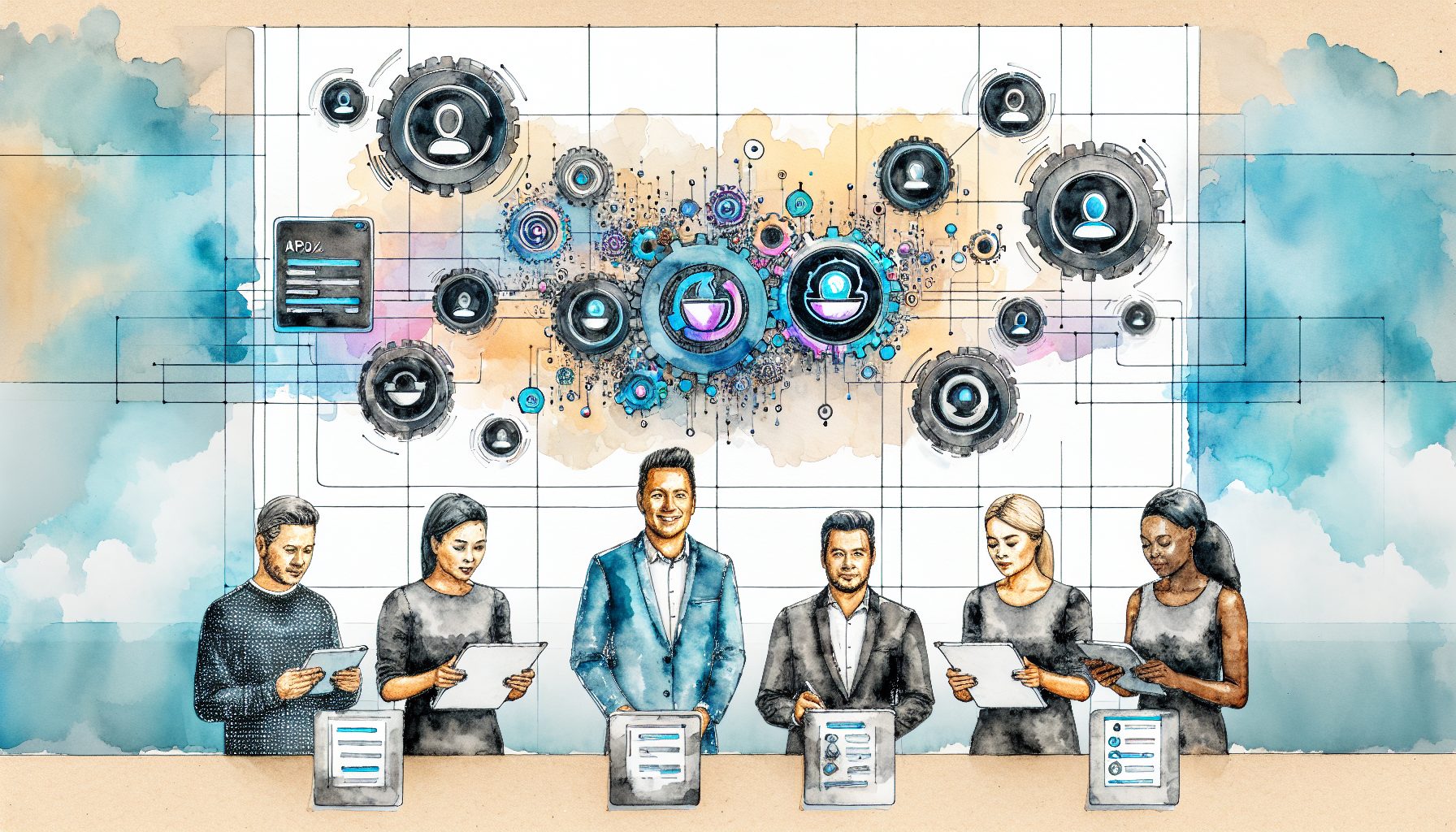
API-First AI Agents: Redefining SaaS Onboarding and Automation in 2026
As businesses continue to adapt to the rapid pace of technological change, innovative strategies are essential for enhancing efficiency and improving user experiences. The rise of API-first AI agents is poised to transform Software as a Service (SaaS) onboarding and automation practices by 2026, providing substantial advantages for organizations and their clients alike.
Estimated reading time: 8 minutes
- API-first AI agents streamline onboarding and automate user interactions.
- They offer a flexible architecture that enhances integration and user experience.
- Utilizing real-time insights, these agents can personalize user guidance during onboarding.
- Implementing API-first agents can significantly reduce abandonment rates.
- Companies that embrace this model are better positioned to maintain a competitive edge.
Table of Contents
- Context and Challenges
- Solution / Approach
- Concrete Example / Case Study
- FAQ
- Authority References
- Conclusion
Context and Challenges
APIs, or Application Programming Interfaces, are a cornerstone of modern software development, facilitating communication between diverse systems. With the growing complexity of these software solutions, the challenges related to implementation and integration have also escalated. Traditional onboarding methods often result in fragmented user experiences, hindering effective engagement and satisfaction. Users frequently struggle to navigate through platforms, encounter difficulties understanding features, and face obstacles in automating essential processes, thus missing opportunities for increased operational efficiency.
By adopting an API-first strategy for AI development, businesses can directly address these challenges. Prioritizing API development enables organizations to build a flexible and scalable framework, leading to seamless integrations and improved user experiences. The competitive landscape necessitates that companies adapt; failure to do so may lead to customer attrition in favor of competitors that embrace smarter onboarding methodologies.
Solution / Approach
The concept of API-first AI agents introduces a transformative approach to address longstanding issues in onboarding and automation. By positioning APIs as fundamental to their design, companies can engineer agents that interact fluidly with existing systems, while ensuring adaptability to meet user needs. This architectural model prioritizes modularity and collaboration, facilitating the integration of various AI functionalities that can be specifically tailored to enhance user interactions.
An excellent case in point is Minimoes, which offers an AI-powered automation solution aimed at improving customer interactions. This solution allows businesses to refine onboarding procedures by embedding AI capabilities directly into the customer journey. Through intuitive API connections, organizations can deploy AI agents capable of providing real-time assistance, answering inquiries, and facilitating smooth transitions to new software.
Implementing an API-first strategy ensures that each component—ranging from chatbots to data analytics tools—is designed for effective communication with other systems. This adaptability empowers companies to tailor their tools in response to user requirements while ensuring there are feedback mechanisms to enhance AI performance via real interactions. Such a continuous improvement cycle is vital for delivering a superior onboarding experience.
Concrete Example / Case Study
To illustrate the impact of API-first AI agents, consider the case of a mid-sized eCommerce platform grappling with elevated abandonment rates during user onboarding. Recognizing the necessity for personalized interactive tutorials, they implemented API-first AI agents to guide new users through the onboarding process, dynamically responding to user behaviors in real-time.
These AI agents utilized natural language processing to comprehend user inquiries and supply corresponding assistance. For example, if a user expressed uncertainty regarding payment integration, the AI agent could instantly provide relevant setup instructions, direct links to video tutorials, and options for live chat support, leveraging API connections with the platform’s customer service tools.
After implementation, the results were remarkable: abandonment rates dropped by 30%, while user satisfaction ratings jumped nearly 50%. The company greatly benefited from the AI’s adaptability, quickly updating its knowledge base and functionalities in response to new features or user feedback. This adaptability has led to lasting improvements in user experiences and operational efficiency.
FAQ
What are API-first AI agents?
API-first AI agents are designed with a primary focus on API development within their architecture, facilitating seamless integration and interaction with existing systems while delivering intelligent automation solutions.
How do API-first AI agents improve onboarding?
They enhance onboarding by delivering personalized, real-time assistance to users, guiding them through various processes and answering queries instantly, thereby reducing complexity and frustration during training.
Are there challenges when implementing API-first AI agents?
Yes, challenges may include ensuring compatibility between systems, managing data security, and adequately training users and staff to fully realize the benefits of the new technology.
Authority References
Conclusion
The evolution towards API-first AI agents represents a significant leap forward in the methodologies used for SaaS onboarding and automation. By fostering seamless integration and customization, enterprises can drastically improve user experiences while boosting operational efficiency. As we look ahead to 2026, embracing these innovative strategies is essential for businesses seeking to thrive in an increasingly competitive digital landscape. This progressive shift not only serves organizational goals but also strengthens customer relationships through enhanced interactions and effective onboarding experiences.

Tech blogger focused on AI, automation, and modern web tools.
Sharing practical insights, best practices, and strategies to build smarter digital systems.