API-Driven AI Agents: Redesigning SaaS Backends with Deployable Intelligence
API-driven AI agents are reshaping the landscape of Software as a Service (SaaS) platforms by embedding intelligence into the backend infrastructure. This transformation is vital for businesses striving for operational efficiency in today’s digital economy. In this article, we explore how API-driven AI agents function, their benefits to organizations, and a robust implementation framework.
Estimated Reading Time: 7 minutes
- Understand the context and challenges businesses face with current SaaS platforms.
- Explore the architecture of API-driven AI agents.
- Examine a real-world case study illustrating their application.
- Learn how to effectively integrate these agents into existing systems.
- Find answers to common FAQs regarding API-driven AI agents.
Table of Contents
- Context and Challenges
- Solution / Approach
- Concrete Example / Case Study
- FAQ
- Authority References
- Conclusion
Context and Challenges
API-driven AI agents are sophisticated software components that utilize application programming interfaces (APIs) to access external data sources and services. They employ artificial intelligence (AI) algorithms for intelligent decision-making. As businesses navigate today’s complex digital landscape, they encounter several challenges:
- Data Overload: Organizations face vast amounts of data, making it challenging to extract meaningful insights.
- Integration Issues: Many existing SaaS platforms struggle to integrate seamlessly with emerging AI technologies.
- Resource Constraints: Companies often lack the necessary expertise or resources to develop advanced AI solutions independently.
To remain competitive, it is critical for businesses to identify and implement AI-driven solutions effectively. The potential cost of inaction includes lost opportunities and a lag behind more innovative competitors.
Solution / Approach
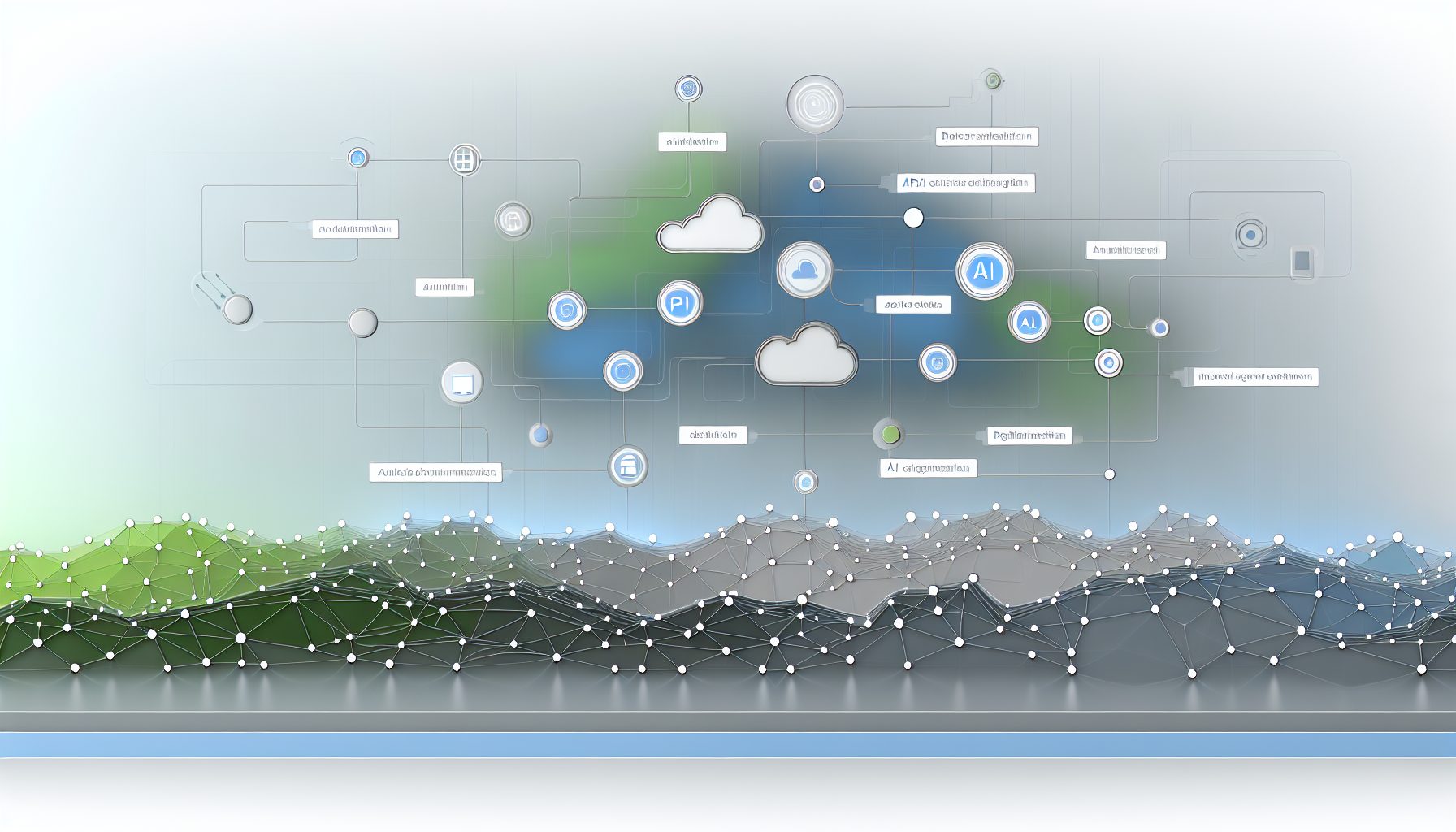
The integration of API-driven AI agents into SaaS platforms can be successfully achieved through a modular architecture. This flexible architecture consists of three interconnected layers:
- Data Layer: This foundational layer connects to databases and data lakes through APIs, enabling the efficient collection and preprocessing of relevant data.
- Processing Layer: Home to AI algorithms and real-time decision-making engines, this layer analyzes incoming data, often utilizing advanced machine learning techniques.
- Application Layer: This top layer interfaces with the SaaS applications, allowing users to derive insights generated by the AI agents directly.
Successful implementation of API-driven AI agents necessitates collaboration with experienced development agencies. For example, MySushiCode specializes in custom development, offering tailored solutions that can effectively integrate with existing infrastructure.
Concrete Example / Case Study
To illustrate the effectiveness of API-driven AI agents, let’s examine a hypothetical case of RetailX, an e-commerce platform struggling with declining conversion rates. RetailX decided to enhance customer experiences by integrating API-driven AI agents.
Step 1: Data Integration – RetailX employed APIs to gather data from customer interactions, such as previous purchases and engagement metrics.
Step 2: Intelligent Processing – An AI agent was configured to analyze this data for trends and make personalized product recommendations. For instance, if a customer typically purchased fitness items, the AI would highlight promotions on related products.
Step 3: Application Layer – The personalized recommendations were incorporated into the user interface, enriching the shopping experience without requiring users to sift through irrelevant options.
Following the integration of AI-driven agents, RetailX reported a remarkable 30% increase in conversion rates within three months, showcasing the tangible impact of deploying intelligent AI solutions at scale.
FAQ
1. What are API-driven AI agents?
API-driven AI agents are software components that access external data and services via APIs, utilizing AI to derive intelligent recommendations and decisions based on the processed information.
2. How can businesses benefit from integrating AI into their SaaS solutions?
Incorporating AI can lead to enhanced customer experiences, improved decision-making processes, and increased operational efficiency by automating routine tasks and offering insightful recommendations.
3. What are the common challenges when adopting API-driven AI agents?
Organizations may encounter challenges such as data integration hurdles, insufficient AI expertise, and the need for substantial upfront investments in technological infrastructure.
Authority References
For a deeper understanding of API integrations and AI technology, consider the following resources:
- IBM – Understanding APIs
- Towards Data Science – What is AI?
- Forbes – Understanding Artificial Intelligence
Conclusion
In conclusion, API-driven AI agents signal a significant shift in the operation of SaaS platforms, equipping companies with essential tools to maximize data and AI utilization. As technology continues to advance, it is imperative for businesses to adapt by adopting these intelligent solutions to maintain their competitive edge. By employing modular architectures and partnering with specialized development agencies like MySushiCode, organizations can create powerful systems that drive efficiency and enrich customer interactions.

Tech blogger focused on AI, automation, and modern web tools.
Sharing practical insights, best practices, and strategies to build smarter digital systems.