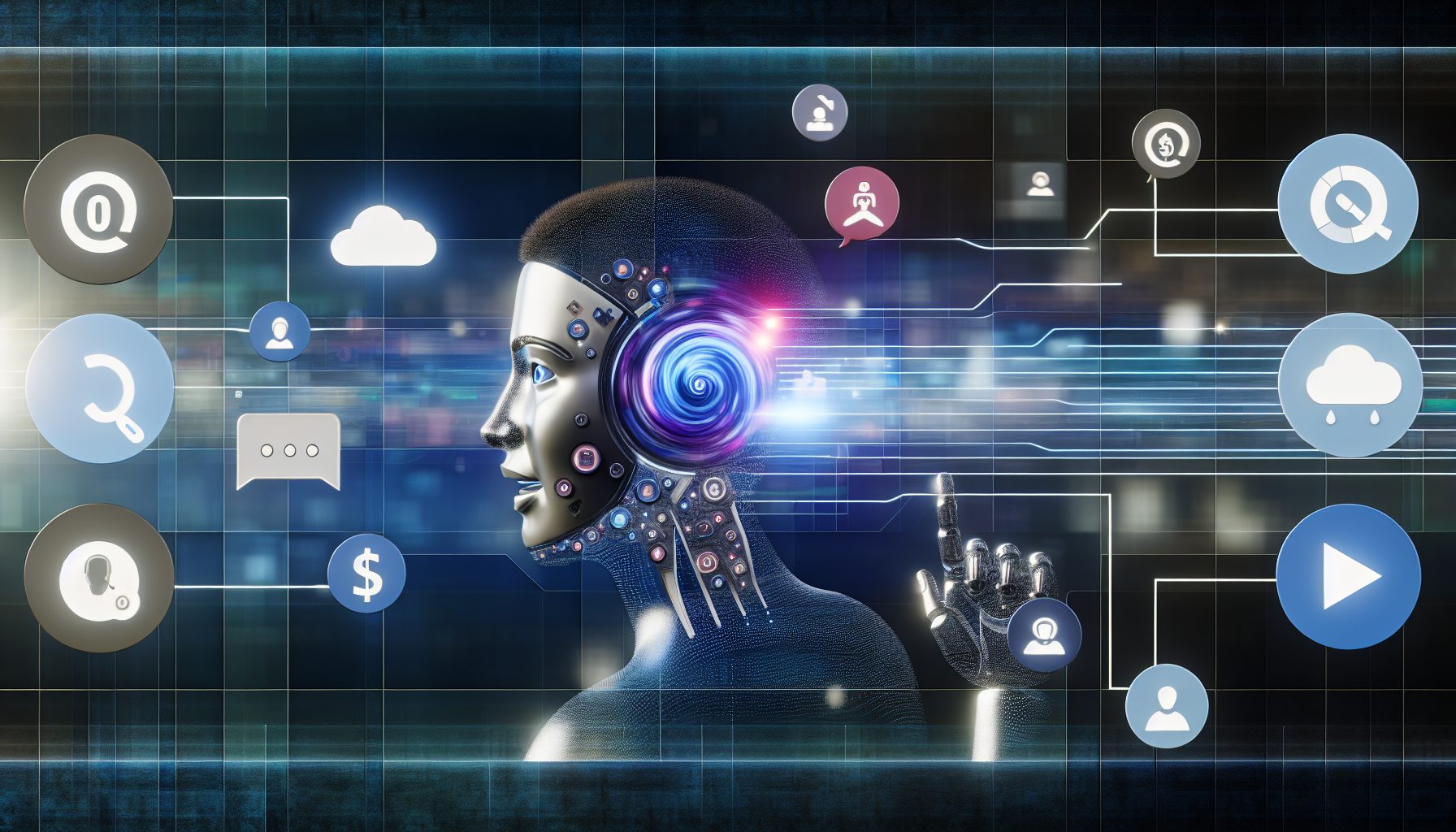
From Chatbot to Digital Avatar: Building a Modular AI Agent for SaaS Customer Interactions
As customer expectations continue to evolve in today’s fast-paced digital environment, businesses are increasingly shifting from traditional customer service models to more advanced solutions. This evolution embraces immediate, personalized responses through sophisticated technologies. Central to this transition is the evolution of simple chatbots into dynamic digital avatars, enhancing user experience and automating customer interactions in a manner that addresses contemporary demands.
Estimated reading time: 8 minutes
- Enhanced User Experience: Digital avatars offer a more engaging interaction compared to traditional chatbots.
- Cost Efficiency: Automating customer interactions significantly reduces operational costs.
- Scalability: Modular designs allow businesses to expand functionalities without major overhauls.
- Personalization: Tailored interactions help improve customer satisfaction rates.
- Integration: Smooth integration with existing systems ensures operational continuity.
Table of Contents
- Context and Challenges
- Solution / Approach
- Concrete Example / Case Study
- FAQ
- Authority References
- Conclusion
Context and Challenges
Building a modular AI agent involves creating a system comprised of interoperable components aimed at enhancing customer interactions. This could include chatbots, voice assistants, and visual avatars that emulate human behavior. Each element plays a vital role in delivering more comprehensive customer service.
Within the competitive SaaS landscape, businesses face several challenges:
- Scalability: As customer bases expand, the demand for support systems increases without a corresponding rise in costs.
- Integration: New technologies must seamlessly work with existing systems to ensure a unified customer experience.
- Personalization: Users desire personalized interactions that draw from their historical data and preferences.
To navigate these challenges successfully, businesses should familiarize themselves with critical concepts such as natural language processing (NLP), machine learning (ML), and effective user experience (UX) design. Understanding these principles is essential for anyone looking to implement a modular AI system.
Solution / Approach
The ideal approach for creating a modular AI agent involves the development of a digital avatar, which is structured to allow flexibility and growth over time. By integrating various AI technologies, businesses can produce an agent that can not only answer questions but also engage customers on an emotional level, which is critical for building lasting relationships.
Generally, this architecture consists of three essential layers:
- Frontend Interaction: This encompasses a user interface such as a chatbot on a website or a virtual support agent accessible through mobile applications.
- Core Engine: The core of the digital avatar, responsible for managing natural language processing and learning algorithms to interpret customer queries and deliver responses.
- Integration Layer: This layer serves to connect the core engine with third-party systems, databases, and APIs, facilitating seamless transitions across various software environments.
Implementing these systems can be facilitated by specialized services that focus on automating customer interactions. For instance, automating customer interactions can drastically reduce response times while enhancing the quality of customer service. Utilizing pre-built modules that can be tailored to a business’s unique needs can yield significant time and resource savings.
Concrete Example / Case Study
Let’s consider a mid-sized e-commerce company struggling with high volumes of customer inquiries. To address this issue, they adopted a modular AI agent, replacing their basic chatbot with a sophisticated digital avatar integrated with their customer relationship management (CRM) systems.
The company employed a phased approach in its implementation:
- Initially, they launched a fundamental FAQ chatbot capable of addressing common queries.
- They then introduced NLP functionalities to allow for personalized interactions based on each customer’s purchase history.
- As a final step, they incorporated voice recognition features, enabling customers to interact through voice commands.
The results were significant. The e-commerce business achieved a 40% reduction in response times and observed an increase in customer satisfaction scores. By continuously iterating on their digital avatar and adding functionalities, they transformed a basic chatbot into a highly effective and responsive customer engagement tool.
FAQ
1. What are the benefits of a modular AI agent compared to a traditional chatbot?
A modular AI agent is built to be more flexible and scalable, allowing the integration of various functionalities that facilitate personalized and dynamic interactions, unlike static traditional chatbots.
2. How can I ensure smooth integration of my AI agent with existing systems?
To achieve seamless integration, select platforms with robust API capabilities and collaborate with experienced service providers. Conduct extensive testing during the setup phase to identify potential issues early on.
3. What are essential features to include in a digital avatar for customer interactions?
Essential features should encapsulate natural language processing, contextual understanding, voice recognition, and the capacity to learn from user interactions, which collectively enhance user experience and satisfaction.
Authority References
For a deeper understanding of the technologies discussed, consider reviewing the following resources:
Conclusion
The transition from chatbots to digital avatars marks a significant leap in enhancing customer interaction. By developing a modular AI agent, businesses can deliver enriched, personalized experiences that align with modern expectations. Investing in digital avatars not only streamlines customer interactions but also leads to enhanced customer satisfaction and loyalty.

Tech blogger focused on AI, automation, and modern web tools.
Sharing practical insights, best practices, and strategies to build smarter digital systems.